Your nose does a lot of work. It shapes the center of your face, yes, but it also filters and conditions every breath you take. So when something about your nose feels off, the question becomes: is this a cosmetic concern, or a functional one? Or could it be both?
Rhinoplasty and septoplasty are two of the most commonly performed nasal surgeries in the United States, but they address very different problems. Understanding what each procedure does, how they differ, and when they can be combined is one of the most important steps in determining which makes the most sense for you.
At Ayala ENT & Facial Plastic Surgery in McAllen, TX, Harvard-trained, double board-certified otolaryngologist and facial plastic surgeon Dr. Carlos Ayala treats the full scope of nasal concerns. His dual specialization gives him the rare ability to evaluate and treat the nose from every angle, addressing appearance and airflow in the same surgical plan when needed.
What Is Rhinoplasty?
Rhinoplasty is a cosmetic surgical procedure that primarily focuses on changing the appearance of the nose. Often referred to as a “nose job,” rhinoplasty adjusts the bone, cartilage and soft tissue to bring the nose into harmony with the surrounding features. It can be used to refine the bridge, reshape a bulbous tip, adjust nostril width, correct asymmetry and repair structural damage after an injury.
According to the American Academy of Facial Plastic and Reconstructive Surgery (AAFPRS), rhinoplasty has remained the most requested facial procedure for five consecutive years. It consistently ranks among the top cosmetic surgeries overall, with the American Society of Plastic Surgeons (ASPS) reporting over 48,000 rhinoplasties performed in 2024 alone.
| Rhinoplasty: Quick Details | |
|---|---|
| Purpose | Change the nose’s external appearance |
| Common concerns addressed | Dorsal hump, wide or bulbous tip, crooked bridge, nostril asymmetry, overall size |
| Type of surgery | Cosmetic (elective) |
| Anesthesia | General anesthesia or IV sedation |
| Typical recovery | 1 to 2 weeks before returning to daily activities; full results visible at 12 months |
| Insurance coverage | Not covered, as rhinoplasty is considered elective/cosmetic |
What Is Septoplasty?
Septoplasty is a type of functional rhinoplasty that straightens a deviated nasal septum, the thin wall of cartilage and bone that divides the inside of the nose into two passages. When the septum is crooked or pushed too far to one side, it can partially block one or both nasal airways, making it difficult to breathe comfortably through the nose.
A deviated septum is extremely common. Some studies estimate that 75% to 80% of people have some degree of septal deviation, though many never experience symptoms. For those who do, the most frequent complaints include chronic nasal congestion, mouth breathing, snoring, recurrent sinus infections and headaches. Around 260,000 septoplasties are performed in the U.S. each year, making it one of the most common surgeries performed by otolaryngologists.
Patients often ask if septoplasty can fix a crooked nose. On its own, septoplasty does not change the outward appearance of the nose. Because surgery takes place entirely inside the nasal cavity, the nose bridge, tip and overall size or symmetry are not affected. If you’re hoping for visible cosmetic changes alongside improved breathing, a combined approach is more likely to help you achieve your goals.
| Septoplasty: Quick Details | |
|---|---|
| Purpose | Correct a deviated septum to improve nasal airflow |
| Common concerns addressed | Chronic nasal congestion, difficulty breathing through the nose, snoring, recurrent sinus infections, headaches |
| Type of surgery | Functional (medically necessary) |
| Anesthesia | General anesthesia or local anesthesia with sedation |
| Typical recovery | 3 to 7 days before returning to daily activities; full healing over several weeks |
| Insurance coverage | Often covered by insurance when deemed medically necessary |
How Do Rhinoplasty and Septoplasty Compare?
At its simplest, rhinoplasty changes how the nose looks, while septoplasty changes how the nose works.
But things are rarely simple, especially when functional and aesthetic issues overlap. This happens often: patients come in for cosmetic reasons and learn that it’s a deviated septum that has been affecting their breathing for years, while others seeking help for chronic congestion realize that the size or shape of the nose could be refined at the same time.
| Rhinoplasty vs. Septoplasty | ||
|---|---|---|
| Rhinoplasty | Septoplasty | |
| Primary goal | Improve appearance | Improve breathing |
| What it corrects | Size, shape, proportions | Septal deviation |
| Visible changes | Yes | No |
| Medical necessity | No (elective) | Yes (when requirements are met) |
| Insurance | Not covered | Often covered with documentation |
| Recovery timeline | 1 to 2 weeks; final results at ~12 months | 3 to 7 days; full healing after 3 to 6 months |
| Performed by | Facial plastic surgeon | Otolaryngologist |
Because rhinoplasty is primarily a cosmetic surgery and septoplasty is an ENT procedure, surgeons who are trained in one specialty may not be trained in the other. This is why Dr. Ayala’s dual board certification in otolaryngology and facial plastic surgery gives patients with both functional and aesthetic concerns a distinct advantage. Everything can be addressed in the same surgical plan, under the same roof, by the same experienced surgeon who understands both sides of the equation.
Can Rhinoplasty and Septoplasty Be Done Together?
Yes. When rhinoplasty and septoplasty are performed during the same operation, the combined procedure is called septorhinoplasty. It’s a common pairing, and in many cases, it’s the preferred approach.
There are practical reasons for this. Combining procedures means one surgery, one round of anesthesia and one recovery period instead of two. There are clinical reasons, too. The septum provides structural support for the entire nose. A surgeon addressing the external shape often needs to account for the septum’s position and integrity, and vice versa. Working on the internal and external framework together allows for a more balanced, cohesive result.
From an insurance standpoint, the septoplasty portion of a septorhinoplasty may still be covered if it meets medical necessity criteria, while the cosmetic rhinoplasty portion is typically paid out of pocket. Dr. Ayala’s team can help patients understand how this billing works before scheduling surgery.
How Do I Know Whether I Need Rhinoplasty, Septoplasty, or Both?
This is one of the most common questions we hear, and the answer depends on what’s going on with your nose and what symptoms (if any) you’re experiencing.
Nasal obstruction can have several causes, and symptoms alone cannot determine whether septoplasty, rhinoplasty or another treatment is appropriate. A physical examination is needed to identify the structures contributing to your symptoms.
Still, the concerns that bring you to a consultation can be a helpful starting point. Find the description below that sounds most like you:
“I’m unhappy with how my nose looks, but my breathing is fine.”
👉 Rhinoplasty
Rhinoplasty is a cosmetic procedure that refines the size, shape and proportions of the nose, making it a better fit for aesthetic improvement when no functional correction is needed.
“I can’t breathe well through my nose, but I like how it looks.”
👉 Septoplasty
If a deviated septum is restricting airflow, septoplasty can straighten the internal structure of the nose to help you breathe more freely without changing how your nose looks.
“I have breathing problems, but there are also things I’d like to change about how my nose looks.”
👉 Septorhinoplasty
Both issues can often be addressed during the same surgery, allowing your surgeon to improve nasal airflow while making the cosmetic changes you want.
“I’ve had a previous rhinoplasty, but something isn’t right.”
👉 Revision rhinoplasty
Revision rhinoplasty can address an unsatisfying cosmetic result, breathing difficulties that developed after surgery, or both. Septoplasty may be part of the revision plan.
“My breathing problems clear up with decongestants.”
👉 Surgery may not be the best starting point.
Congestion that responds to medication can point to inflammation rather than structural obstruction. Your evaluation can help determine what is actually limiting your airflow before surgery is considered.
If any of these sound familiar, it may be worth discussing your concerns with a qualified nasal surgeon. A consultation with Dr. Ayala in McAllen, Texas, can help you understand what options are available and what approach may be appropriate for your individual anatomy and goals.
What Happens During My Consultation?
You don’t have to have all the answers before you come in. Your consultation is where we sort through what’s bothering you, what you’d like to change and whether those concerns are cosmetic, functional or a little of both. From there, we can examine your nasal structure, talk through your options and recommend the approach that makes the most sense for you.
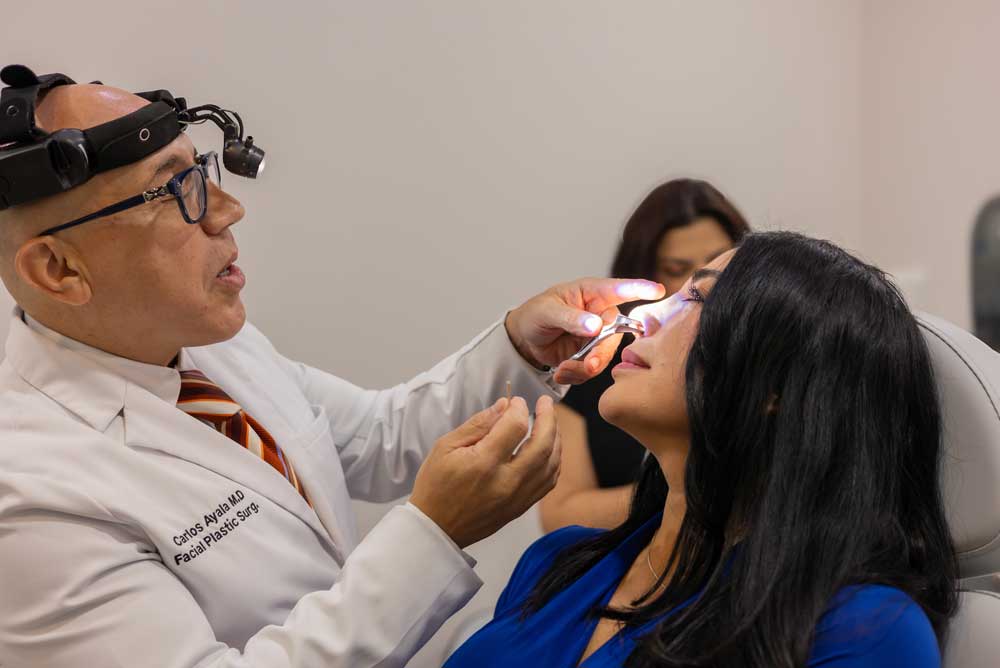
Because Dr. Ayala is double board-certified in facial plastic surgery and otolaryngology, the evaluation looks at your nose from both perspectives. That means examining the external shape of your nose as well as the internal structures that affect airflow, including the septum, nasal passages and other possible sources of obstruction.
During your consultation, we use VECTRA 3D imaging to help you visualize potential cosmetic changes before surgery. This gives a more concrete way to discuss details like bridge height, tip shape and overall proportions, while the physical exam helps determine what is actually possible and appropriate for your anatomy.
“We use these tools because every nose is different,” explains Dr. Ayala. “Each surgery is planned around that individual person.”
By the end of your visit, you should have a better understanding of your options, which procedure or combination of procedures might be right for you, and what kind of results you can realistically expect.
Book Your Consultation | Browse Our Before & After Gallery
Book Your Consultation in McAllen, Texas
The nose has two important jobs: looking good and working well.
Because it sits in the center of the face, humps or asymmetries can affect your entire appearance, and because it’s part of the upper airway, structural problems can make breathing more difficult than it needs to be.
If you want to improve how your nose looks, how it breathes, or both, Dr. Carlos Ayala and his team can evaluate your concerns and develop a personalized surgical plan just for you.
At Ayala ENT & Facial Plastic Surgery, we proudly serve the communities of the Rio Grande Valley, including McAllen, Edinburg, Mission, Harlingen and Brownsville. While Dr. Ayala opened his practice in McAllen, where it could have the biggest impact, his reputation has made him a leading otolaryngologist and facial plastic surgeon in all of South Texas, with many patients traveling from Corpus Christi, San Antonio and even Houston for his training and expertise.
Call us today at 956-688-6673 or request a consultation online to get started.
